Books to learn English — and a way to remember them.
A short list of public-domain books that suit beginner, intermediate and advanced readers, plus a reading method that turns the words you look up into words you keep.
One email when we launch, nothing else. No spam.
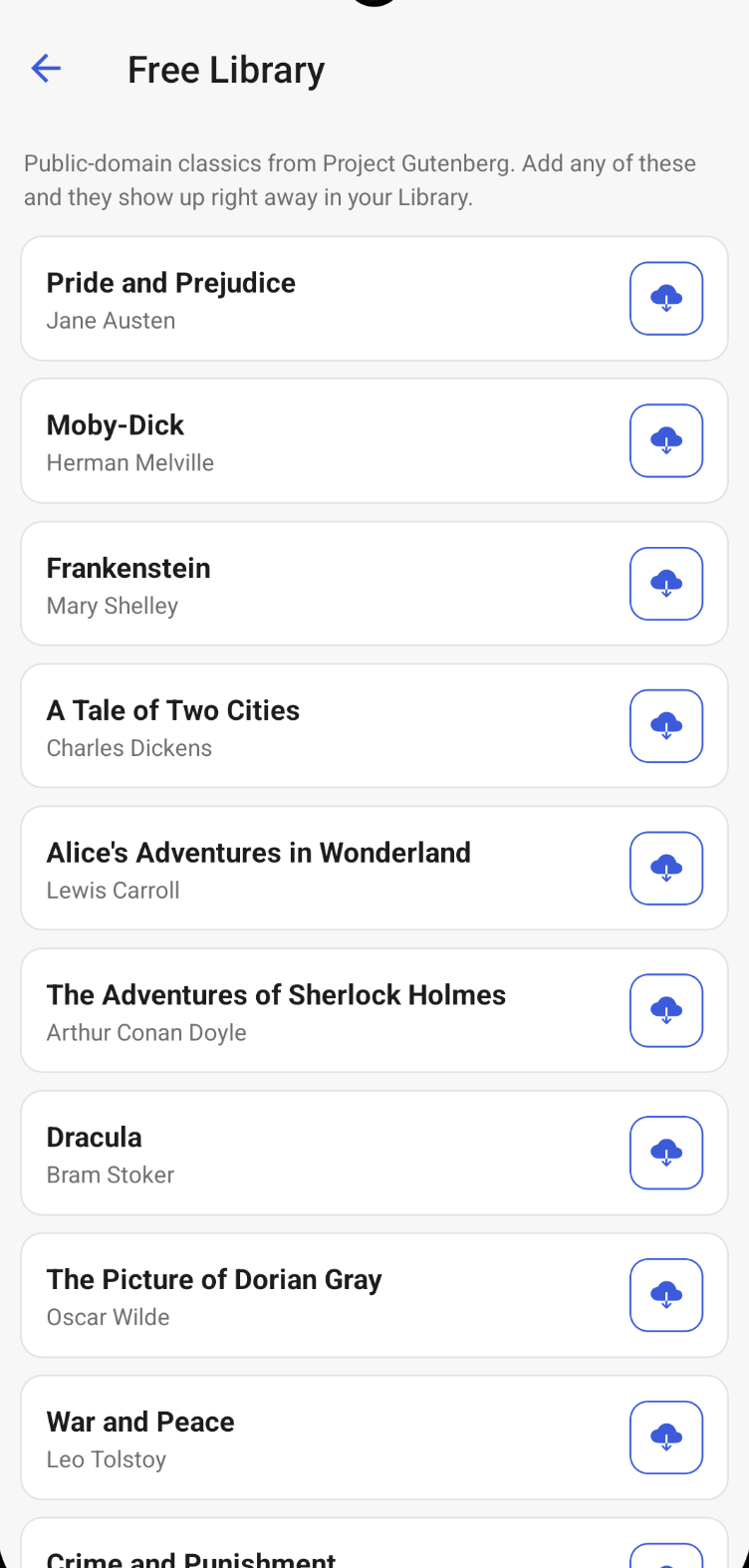
- Every title is free
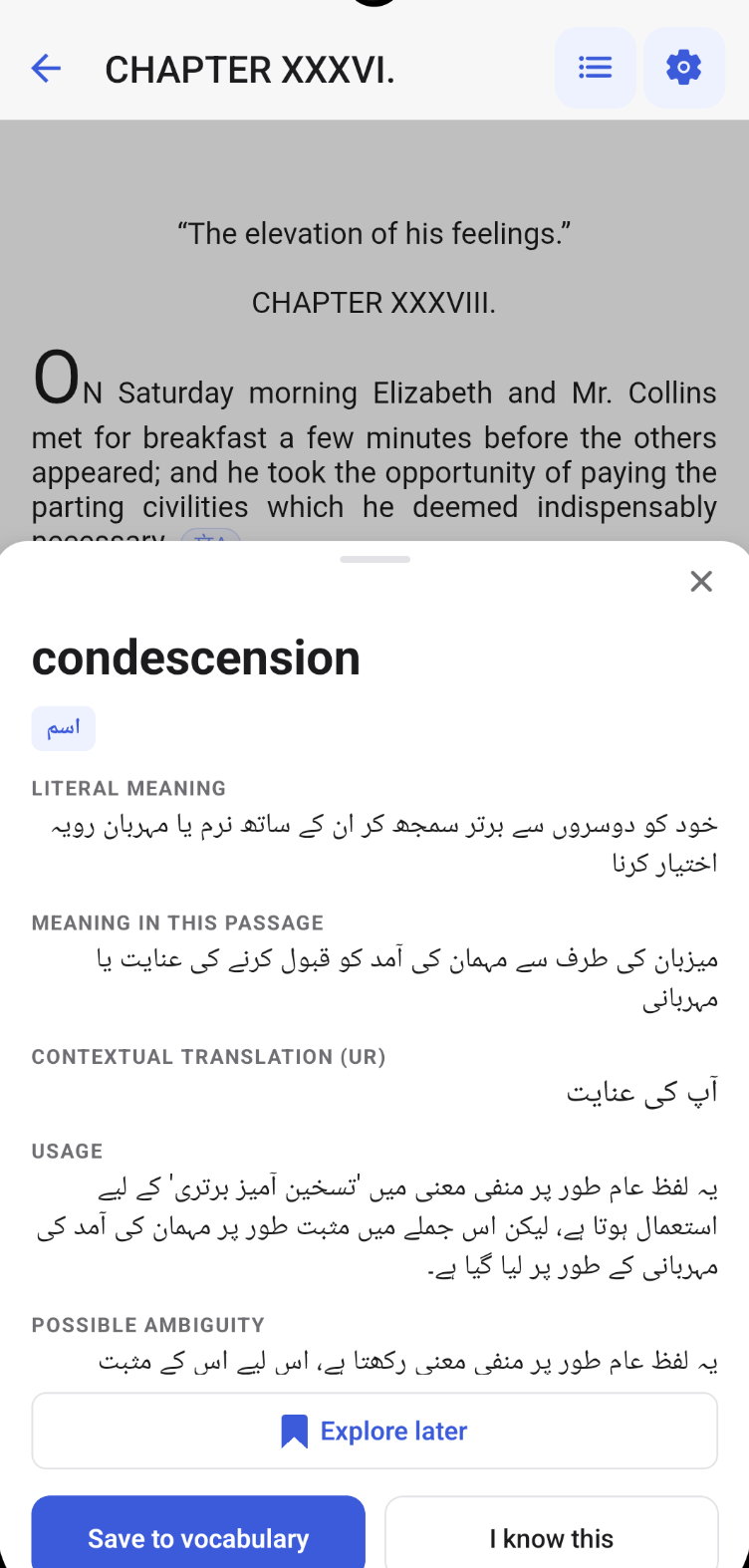
- Tap any word to translate
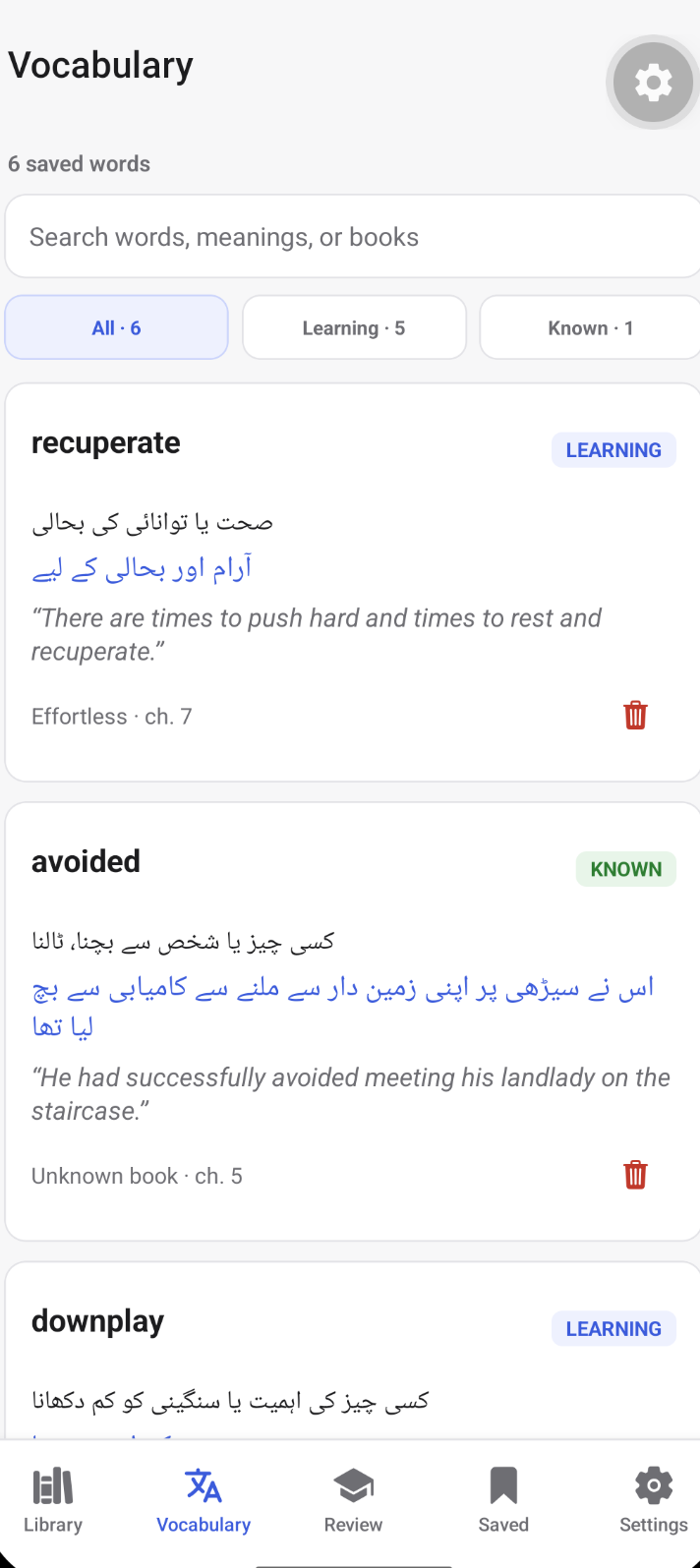
- Words return for review
- Reads offline
Reading list
Where to start, by level.
Choose a book where you understand most sentences on your own. The unknown words should be a spice, not the meal. Every title below is in the public domain and included free in the uSage library.
Beginner
Short sentences, familiar vocabulary, plenty of dialogue.
Aesop's Fables
A page or two per story, so a whole text feels finished.
Alice's Adventures in Wonderland
Simple sentences, playful words, strange enough to keep going.
The Happy Prince and Other Tales
Gentle stories with a clear emotional line.
Intermediate
Longer paragraphs and idiom, but a plot that pulls you along.
The Adventures of Sherlock Holmes
Self-contained cases; each one rewards you at the end.
The Strange Case of Dr Jekyll and Mr Hyde
Short, tense, and full of useful descriptive language.
Pride and Prejudice
Dialogue-heavy, so the English sounds like people talking.
Advanced
Dense vocabulary and older constructions worth slowing down for.
Frankenstein
Formal, layered narration that stretches your reading.
Dracula
Letters and diaries in several distinct voices.
Moby-Dick
The vocabulary workout, one chapter at a time.
How to read for learning
Look it up, then keep the sentence.
Most vocabulary is lost because the word is met once and never again. The fix is not more effort — it is meeting the same word a few more times, spaced out.
Tap instead of guessing
See the meaning and translation for the word as used in that line, then carry on before the sentence fades.
Save it with its sentence
The line you found it in is the memory hook. uSage keeps them together.
Review a little, often
Spaced repetition brings each word back just before you'd forget it, and retires the ones you know.
Keep the streak honest
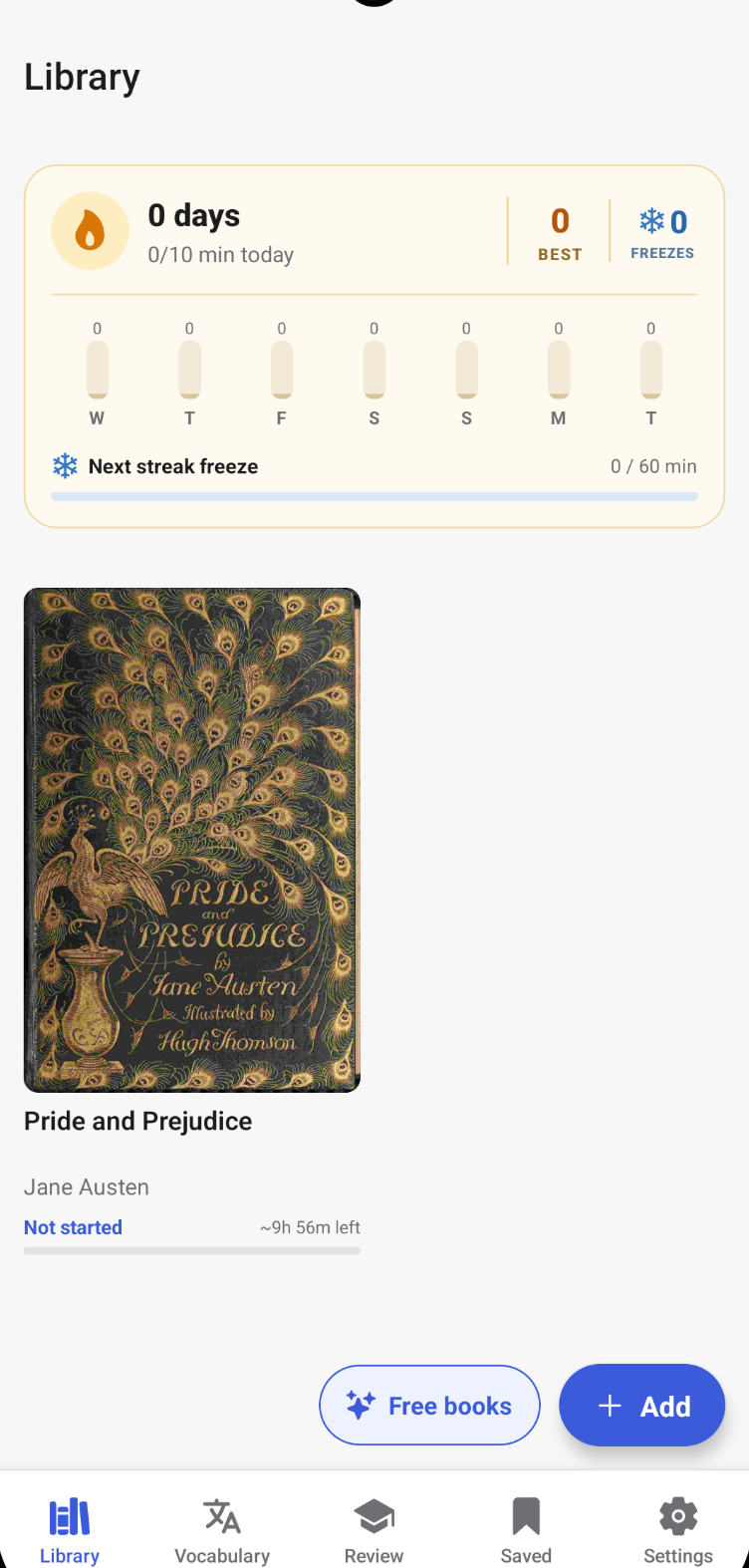
Ten minutes a day counts. Streak freezes cover the days that get away from you.
Questions
About learning English through books.
Can you really learn English by reading books?
Reading gives you words in context — the sentence around a word teaches you how it is actually used, which a word list cannot. It works best when you look words up as you meet them and revisit them later, which is exactly the loop uSage builds in.
Which books should I start with?
Pick something short with a strong plot and a level that lets you understand most sentences without help. Aesop's Fables and Alice's Adventures in Wonderland are good first choices; move to Sherlock Holmes once you're comfortable.
Are these books free?
Yes. Every title listed here is in the public domain and included in the uSage library at no cost. You can also import any EPUB you already own.
What if I don't understand a word?
Tap it. You get the definition and a translation for that word as it is used in that sentence, then keep reading. The word is saved with its original sentence so you can review it later.
How much should I read each day?
Ten to fifteen minutes daily beats an hour once a week. uSage tracks a reading streak, with freezes for the days life gets in the way.
Start with a book, leave with the words.
Join the early access list and we'll email you once, the day uSage opens.
One email when we launch, nothing else. No spam.